
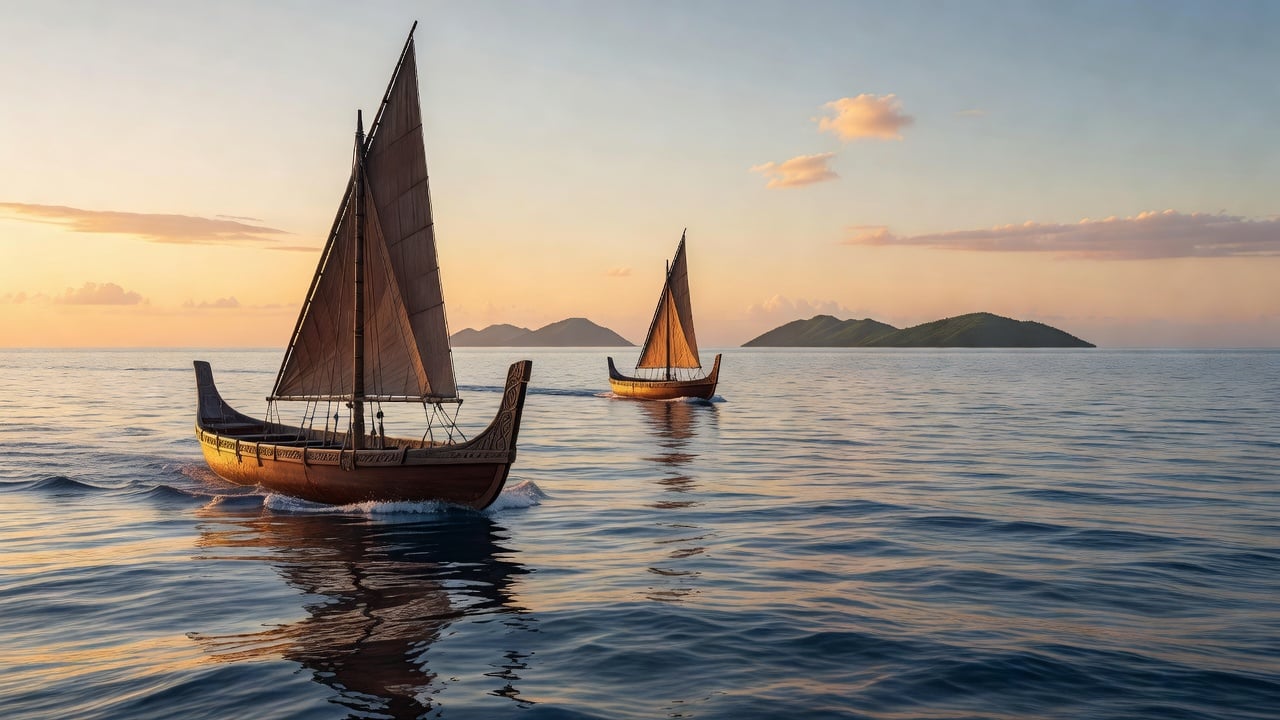
Ancient Polynesians paused eastward voyages for 1,700 years before a remarkable migration across the Pacific. Fresh climate research links this to a severe drought, highlighting human resilience and the seafaring spirit that inspires films like Moana.
In the Disney film Moana, a young navigator embarks on a daring journey across the ocean, echoing the real adventures of ancient Polynesians. After settling in Samoa and Tonga around 3,000 years ago, their descendants paused further exploration for 1,700 years. Then, between 900 and 1100 AD, they launched an extraordinary migration to distant islands like Hawaii, New Zealand, and Easter Island. This rapid expansion connected communities across thousands of kilometers of sea.
Recent scientific research points to environmental changes as a key driver. By studying sediment from swamps and lakes, experts uncovered evidence of a prolonged drought in the region from 850 to 1200 AD, the driest in 2,000 years. With growing populations straining resources, this dry spell likely motivated voyagers to seek new lands with better conditions. Their innovative double-hulled canoes allowed them to navigate against trade winds and reach new horizons.
The result was a thriving network of island societies sharing language, culture, and traditions, even on remote atolls. This story of courage and ingenuity reminds us of humanity's ability to adapt and thrive amid challenges. It celebrates Polynesian heritage and continues to inspire stories of exploration and unity today.

 318.016 SRY