
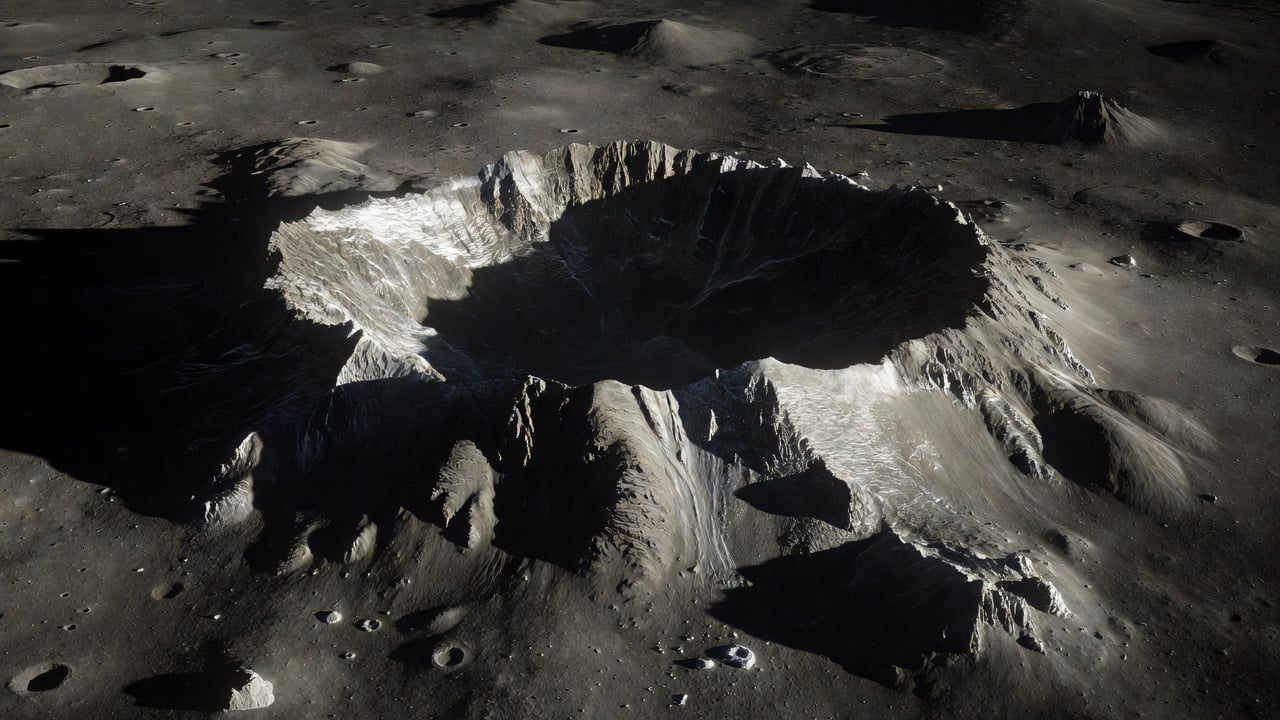
China's Chang'e-7 mission is set to explore the Moon's shadowed craters for water ice using an innovative hopper. This groundbreaking effort could reveal accessible resources for future space exploration and sustainable lunar operations.
China is advancing lunar exploration with its Chang'e-7 mission, aiming to locate water ice in the Moon's permanently shadowed craters near the South Pole. The mission features an orbiter, lander, rover, and a unique hopping robot designed to navigate steep, dark terrain where traditional rovers cannot go. Supported by the Queqiao-2 relay satellite, this coordinated effort seeks to map water resources that could support future astronauts.
This innovative approach highlights a shift toward resource utilization on the Moon. By testing new technologies like the hopper for autonomous navigation in extreme conditions, China is addressing key challenges in accessing potential water ice buried deep in craters. Such discoveries could provide essential materials for life support and fuel, making long-term lunar presence more feasible.
While NASA pursues commercial partnerships for similar goals, China's state-driven mission demonstrates global progress in space science. These efforts collectively inspire hope for international collaboration in harnessing lunar resources, paving the way for exciting advancements in human space exploration.

 494.754 SRY