
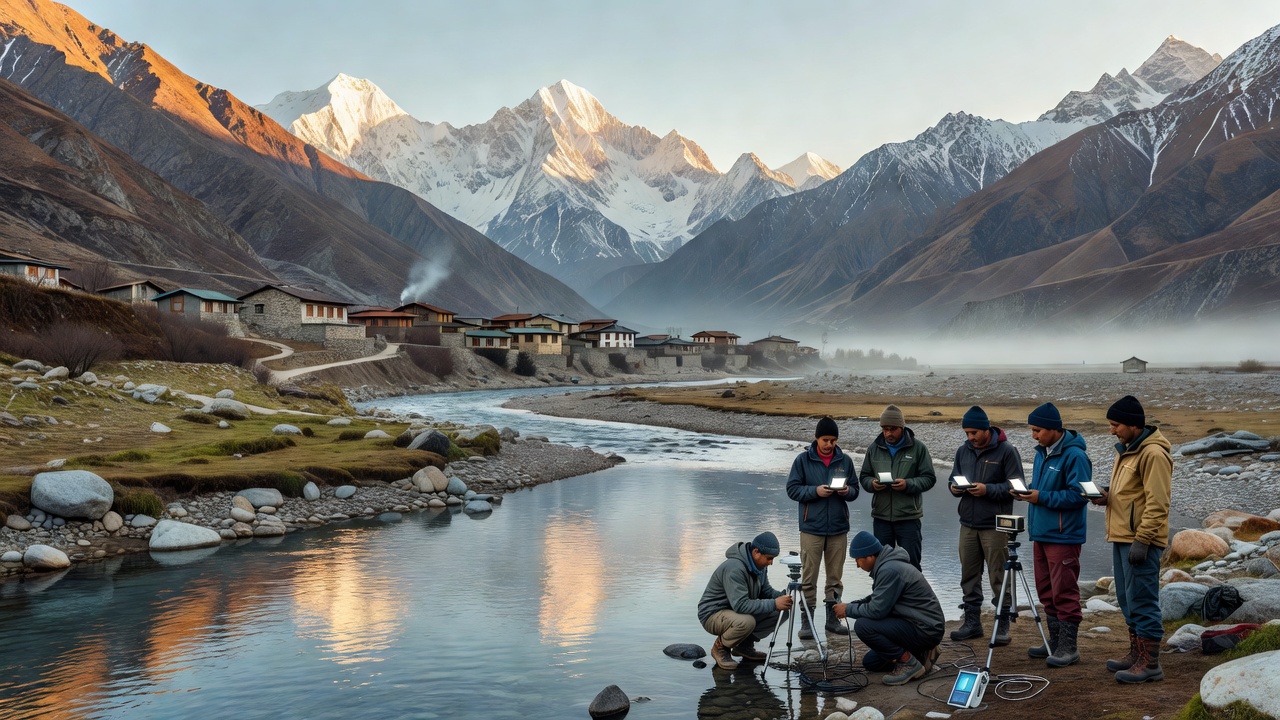
Nepal and China are advancing real-time data sharing to build integrated warning systems against complex mountain hazards. Community efforts in Nepal already demonstrate how quick alerts can save lives downstream.
Recent floods in the Himalayas reveal growing risks from rock and ice collapses, yet they also spotlight opportunities for progress. In Nepal's Koshi basin, upstream gauges and trained volunteers already provide precious time to downstream villages through community-based alerts. These successes prove that local systems work when connected effectively.
Nepal and China have agreed in principle to share information on floods and glacial lakes following similar events. Integrating seismic readings, satellite images, and water sensors could enable faster recognition of cascading hazards across borders. This approach would move beyond single-hazard warnings to handle rare but devastating debris flows.
With political commitment, a regional network linking community, national, and cross-border monitoring can deliver life-saving alerts in minutes. As climate change increases such events, this cooperation fosters resilience and protects more people and infrastructure in threatened valleys.
 497.135 SRY