
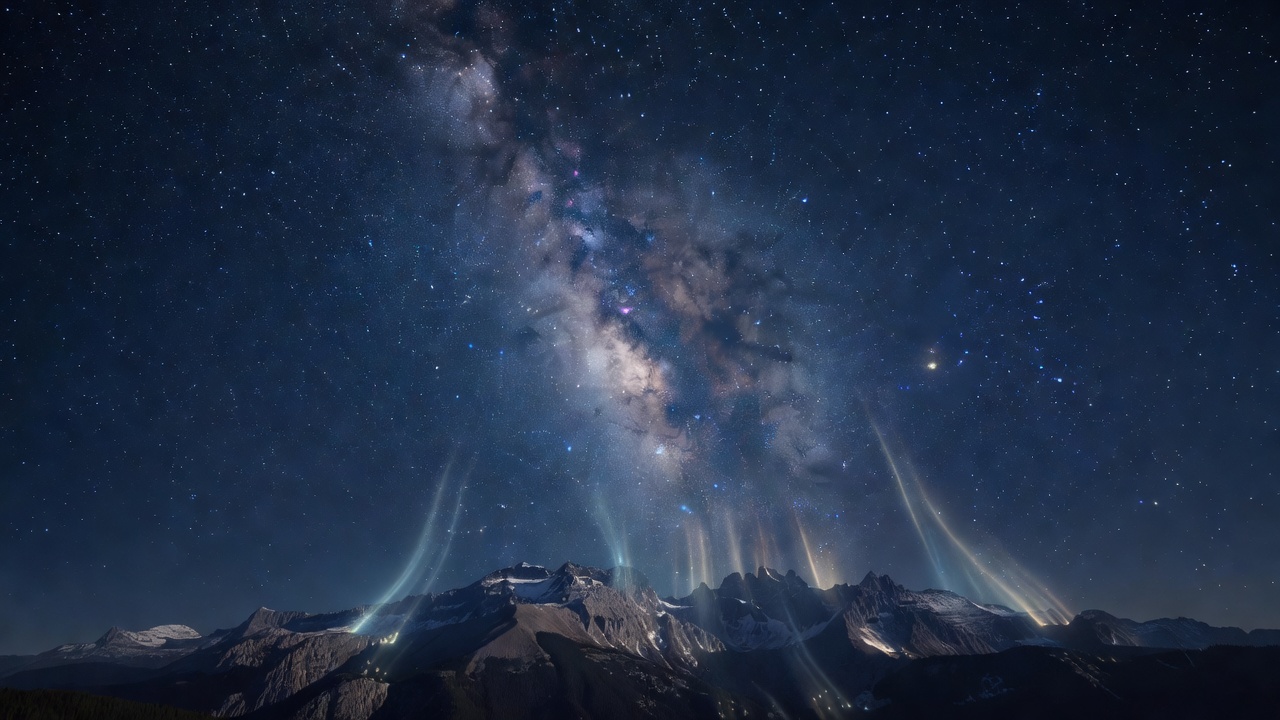
Physicists at CERN used the Large Hadron Collider to simulate cosmic rays, revealing how particle showers form in Earth’s atmosphere. This advance deepens our understanding of the universe and supports fields like archaeology and geology.
In a remarkable step forward for science, researchers at CERN have harnessed the world’s most powerful particle collider to recreate cosmic ray collisions in the lab. By smashing oxygen atoms with protons, the team captured fresh insights into how high-energy particles from space create showers that rain down on Earth. This work celebrates human ingenuity and brings us closer to answering timeless questions about our cosmic origins.
Cosmic rays, discovered over a century ago by physicist Victor Hess, have long fascinated scientists. These fast-moving nuclei from distant stars and black holes not only help explain the building blocks of matter but also power practical tools. From carbon dating ancient artifacts to revealing hidden chambers in pyramids and volcanoes, cosmic rays continue to enrich archaeology, geology, and our shared heritage.
The new data from CERN promises to refine computer models and guide future discoveries. By fostering international collaboration, this study highlights the positive power of science to unite people and spark curiosity. It reminds us that exploring the unknown can lead to unexpected benefits for humanity and a deeper appreciation of our place in the universe.
 79.757 SRY